
-
Calligraphy means "beautiful writing." Your art supply store, stationery store, or online dealer will provide you with a variety of instruments to put beautiful marks on paper. Here are a few tools I've used.
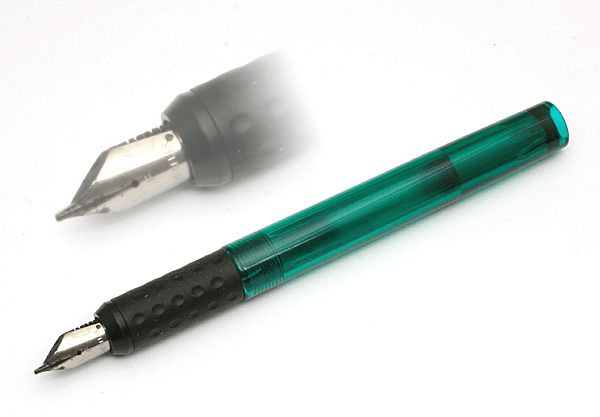
Fountain pen by Sheaffer. When a cartridge is empty, pop on another and keep writing. Comes with several sizes of nibs and colors. These pens cost anywhere from a few dollars for student models to hundreds of dollars apiece for luxury models.
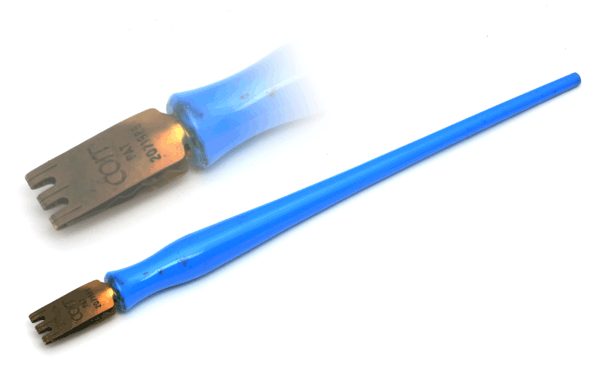
Scroll pen by Coit. It allows me to letter with three strokes at once!
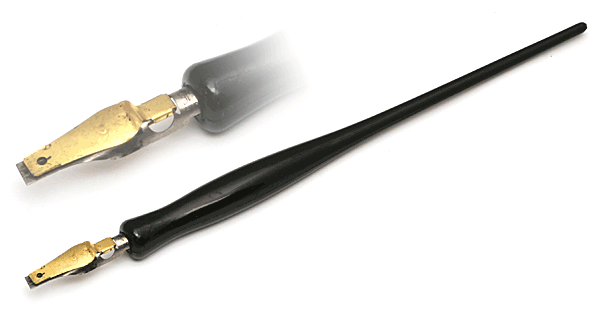
Speedball broad-edge nib and holder. This is the pen I used in most of the videos. Speedball makes a wide selection of nibs. I used the Speedball plastic holder with C0 pen nib in just about all the videos. It's great for its contrast between the thick and thin strokes. But because it is so wide, you'll write fewer characters on an 8 1/2 x 11" sheet of paper. I deliberately chose this nib so the letters would be large and easy to see in the videos.
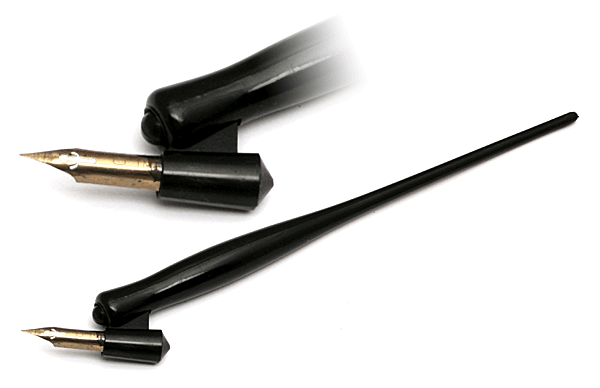
Oblique holder and pointed nib. Used for making beautiful Spencerian or Copperplate calligraphy (the choice for wedding invitations) with their classic looping thick-and-thin strokes.
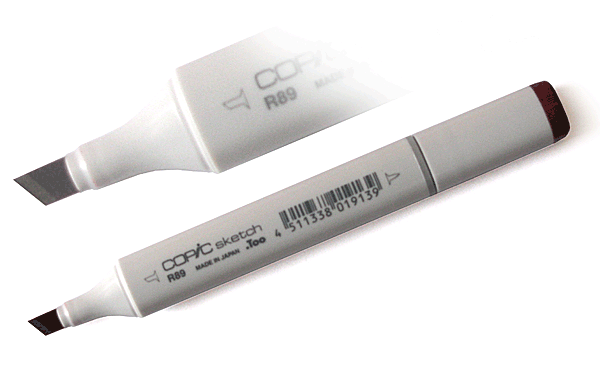
Copic chisel-tip marker. Great for beginners.
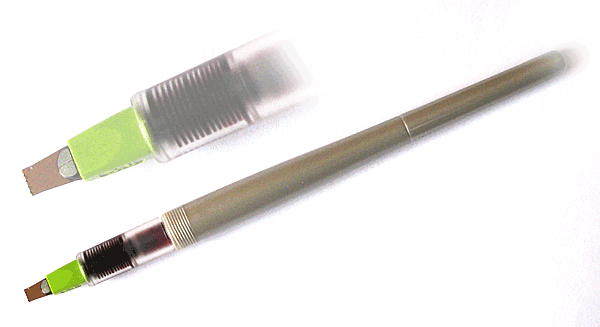
Pilot Parallel Pen. A terrific cartridge pen with a variety of advantages. We have four widths to choose from, and about 12 colors are available. To see it in action, look at the ascender and descender swash videos.
Many more tools than these are available for putting marks on paper.
Many different kinds and shapes of nibs are available, including pointed nibs, round, square, and broad- or chisel-edged. For the Italic "hand" (alphabet style), you'll need a broad-edged nib in your holder or pen. (See the Speedball pen above for an example.) Most beginning calligraphy sets will feature broad-nib pens; you can't go wrong with those.
Take good care of your pen. If you get a dip pen, clean the nib carefully with ammonia-based glass cleaner before putting it aside for the night. If you have a fountain pen and you will not be using it for weeks or months, remove the cartridge and run water through the nib until it is clear so no ink will dry inside and clog the inner workings. Read your pen's instruction book carefully for care and handling. For a few more tips about inks, please see the chapter on inks, Writing Fluids.
Nibs will eventually wear out with long use.
You may want to purchase a fountain pen with a broad nib so you can carry it anywhere and practice -- no ink bottles needed! Get a pen set that includes at least three broad nibs and two holders. I've found the medium and broadest fountain pen nib sizes are perfect for addressing envelopes and jotting down quick notes. What good is learning a skill if you can't put it to work? If you need ohter ideas on how you can put your practice to good use, see the About/What's New link from the home screen.
If you are budget-conscious, you may want to use an inexpensive chisel-tip marker. Avoid the fat markers and get the narrow ones that are made for calligraphy. Copic, Letraset, Prismacolor, and Tria brand markers each have a huge color line of dual-tip markers, though most of them are too wide for fine work. We calligraphers don't think you can have too much of a good thing! They won't create the thinnest edges, but they're great for learning the basics at low cost.