How can we tell what God is like?

What do statesman Benjamin Franklin, football player Jackie Robinson, and television actress Lucille Ball have in common? They all wrote autobiographies. Their words are an open door to their world. We learn of their thoughts, plans, and accomplishments. Though they are dead, their words bring them to life and make them familiar figures.

We can know what God is like because he too wrote a book about himself. Through the Bible we learn of God’s values and plans. Here are some of the things I’ve learned about God. In Genesis I learned that God is powerful, having created the universe and every living creature out of nothing over the course of six days. God also desires fellowship, for he created Adam and Eve, and wanted to walk with them. God is also merciful, for when Adam sinned, God made a way to cover Adam’s sin. He is also a God who makes promises, for he told Adam that he will bring a redeemer to save them from the curse that their sin brought into the world.

He is also a righteous judge, for when the whole world turned wicked, leaving one righteous man left, God punished the world with a flood, saving the one righteous man, Noah, and his family. God also sets plans into motion that will take centuries to finish. He befriended Abraham, granting him righteousness by faith alone. Through Abraham’s seed God would bring the redeemer.

In Exodus I see that God is a covenant-maker. His covenant with the Israelites tells me he wants to dwell with us and bless us. However, he is just and must punish sin and unrighteousness, but not before warning us first.

In Leviticus I see God providing a substitute for my sin. That is, through the animal sacrifices I learn that God will transfer my sin to another, allowing the other to take my blame and punishment. He is also a holy God, untainted by sin.

In Numbers I see a God who journeys with us throughout life, desiring to bring us to a better place, taking care of us all along the way.

I see in Jesus God’s fulfillment of all his plans and promises. Jesus, the Son of God, is the redeemer who willingly took my sins on himself and died for me, just like the animal sacrifices taught. Under his own power, he rose from the dead. As God befriended Abraham by faith, so I enter into a relationship with Jesus by faith, and through that faith I am made righteous in his sight. He breaks the curse that Adam started. Through Jesus, the Holy Spirit was sent to be with me and guide me all the way to the kingdom of God in glory.

God has revealed himself wonderfully in the scriptures, and in the lives of those who follow the truths in the Scriptures.

What Do You Think?

a. Can you learn of people through their biographies? Why or why not?

b. Why does God reveal himself through a book, then send his followers around the world to translate that book for others?

Posted in God | Leave a comment

Is it true that if God doesn’t answer my prayers then there is no God?

People have many ideas about what God is like. Some treat him like a vending machine. Every time you put in money, the vending machine returns an item. Since they never get what they want every time they pray for something, they conclude there is no God.

When God created the first human beings, he made them social creatures who naturally meet with fellow human beings to talk. Today we meet to talk about many things – sports, cars, television shows, celebrities, ourselves, events in our home, school, workplace, and so on. In his prayers in the Psalms, King David talked to God about many things. He gave his thoughts on the ungodly (Psalm 1:4-6), requested help (4:1), shared his sorrows (6:1-7), and worshiped (9:1-5). In prayer, we socialize with God.

So we learn that prayer is not just about asking God for things. God is not a vending machine or a Genie with several wishes to grant. He is a Father with a mind of his own. As you have learned, he does not grant every petition. My son loves to play police officer, spy, CIA agent, and other roles in the hero mold. He has a small armory of plastic weapons to help him pretend. But if he asks me for a working flame-thrower or bazooka, would I give it to him? He knows me well enough to ask within my will.

Then how do we get our prayers answered? The Bible tells us that God hears us and answers us: “And this is the confidence that we have in him, that, if we ask any thing according to his will, he heareth us: And if we know that he hear us, whatsoever we ask, we know that we have the petitions that we desired of him” (1 John 5:14-15).

We ask according to his will. God has a purpose for us here, and he has graciously invited us to participate in that work. For example, God desires that I train up my family for the coming kingdom of God. Occasionally I ask him what I should be training my son for next. Whether two seconds or two days later, I am frequently delighted to get an answer, such as giving him more responsibilities, or relaxing a rule that no longer applies.

God’s great desire is that we enter into a relationship with him and get to know him. Direct your prayers to that end, with a follow-through of obeying the scriptures, and you’ll become more confident about your prayers.

What Do You Think?

a. If you do not answer someone’s question, does that mean you don’t exist?

b. Are there reasons why you would not want to answer certain questions? If so, could you give God the benefit of the doubt?

Posted in God | Leave a comment

Is God’s love unconditional?

God demonstrates his love in different ways to his children. If a child is in rebellion, he may demonstrate his compassion with chastisement to bring her back to repentance. If a child is living by faith, God may demonstrate love with a deeper intimacy in her prayer life. God’s love will continue toward his children, but how that love is experienced may be conditional.

Perhaps we ask this question because we think we have to bargain with God to stay on his good side. We may think we’ve gone so far off track that God no longer loves us. No, God will always love his children, even when they are wayward. Jesus gave us a lovely example of this with the story of the Prodigal Son.

In that story, recounted in Luke 15:11-32, a young man leaves his father with his inheritance, which he then spends foolishly until he had spent it all. In shame he gets a job feeding pigs, which is an unclean animal to the Jews.

God’s love is like this father’s love. His love is unconditional in that he does not stop loving when his son turns from what’s best. But it is conditional in that we receive the greatest blessings of his love when we walk with him in faith and obedience. Which kind of love do you want God to show you?

What Do You Think?

a. If you are a parent who loves her child, would you still love your child if she disobeys you? Why or why not?

b. What is the difference between “love” and “tough love”?

Posted in God | Leave a comment

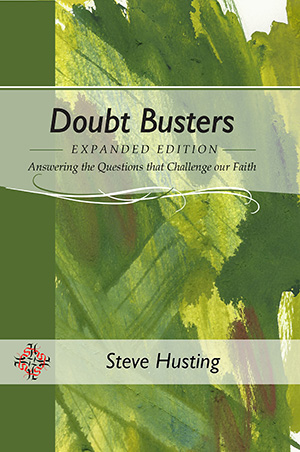
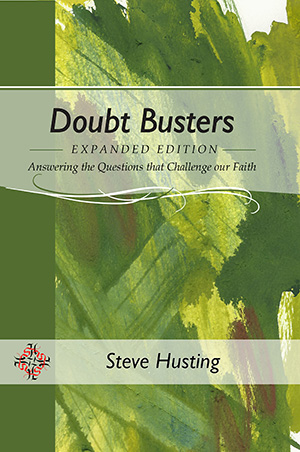
Doubt Busters: Answering the Questions that Challenge our Faith

“How can you prove that God exists?”
“Why did an angry God kill everyone at the Flood?”
“If God is all-powerful, why doesn’t he stop all suffering?”
“Why would the law put a child to death for hitting or cursing his parents?”

These age-old Bible difficulties have caused many people to question the Christian faith. They are tough questions, but they have solid, satisfying answers that can banish your doubts. In this section, Doubt Busters will answer these questions with a friendly, readable style using Bible passages, personal anecdotes, and analogies from nature. The author drew from his years of preaching and writing devotionals to write plainly and root his answers in the word of God.

Who should read this? Doubt Busters is perfect for those whose faith is being crippled by nagging doubts, for it gives plain yet full answers to perplexing Bible questions. It’s a terrific resource for those who want to share their faith, and want to answer the questions that come their way. It’s a great read for young people who are just starting to think about what their faith means to them.

This Doubt Busters online resource is also available in print, as an iPhone app, and on the Kindle as an ebook.

Posted in Doubt Busters | Leave a comment

Slide Show: Why would an angry God kill everyone at the Flood?

This slide show by Steve Husting answers an age-old question that has troubled many people. Let’s look behind the scenes of the question and see what actually occurred at the time of the Flood. This slide show, based on a chapter from Steve’s book, Doubt Busters, will help remove crippling doubts about the fairness of God in passing judgment.
http://www.youtube.com/watch?v=10y8ilK3E54

Posted in Steve's Books | Leave a comment

Ready for a Reward

This immensely practical book answers many important questions related to the Judgment Seat of Christ, such as:

***What are the prerequisites for receiving the greatest rewards?

***Will Jesus judge us according to our works?

***Will God remember my sins after I die?

***Since I’m already saved, do I really need to worry about a time of judgment?

Continue reading

Posted in Steve's Books | Leave a comment

Living with the End in View, Book 2 (Paul on Faith)

How can you face the coming judgment with confidence, prepared to meet Christ?

If you are trusting in your works, that they are good enough, then you need this book. You’ll learn to cease depending on the flesh to find true power in the Spirit. You’ll turn from the Law to live by faith to gain the righteousness needed for a reward. You’ll stop trusting in your works and lean on God’s grace for a fuller salvation. Continue reading

Posted in Steve's Books | Leave a comment

Doubt Busters

“Why would the law put a child to death for hitting or cursing his parents?”

“Why did an angry God kill everyone at the Flood?”

“If God is all-powerful, why doesn’t he stop all suffering?”

These age-old difficulties have caused many people to question the Christian faith. They are tough questions, but they have solid, satisfying answers that can banish your doubts. Continue reading

Posted in Steve's Books | Leave a comment

Forgiving All

Continue reading

Posted in Jesus on Judgment | Tagged , , , , , , , , , | Leave a comment

Following Christ

Continue reading

Posted in Jesus on Judgment | Tagged , , , , , | Leave a comment

Taking the Opportunity

Continue reading

Posted in Jesus on Judgment | Tagged , , , , | Leave a comment

Obeying the Lord

Continue reading

Posted in Jesus on Judgment | Tagged , , , , | Leave a comment

Setting Heavenly Priorities

Living with the end in view involves
Setting Heavenly Priorities

Do not lay up for yourselves treasures on earth, where moth and rust destroy and where thieves break in and steal; but lay up for yourselves treasures in heaven, where neither moth nor rust destroys and where thieves do not break in and steal. For where your treasure is, there your heart will be also. (Matt. 6:19–21)

My wife stores her wedding dress in a custom box out of reach of our son’s prying hands. I keep my tools in several sturdy wooden drawers, and my artwork in a wooden storage area where they can stay flat.

In the verses above, Jesus gives us a choice of where we want to store our treasures. We may store them on earth, where they are subject to decay and theft. However, we may enjoy them only as long as we spend our lives here. Or we may store them in heaven, where they are not subject to destruction and can be enjoyed forever. Continue reading

Posted in Jesus on Judgment | Tagged , , , , , , | Leave a comment