Dealing with a Deceitful Heart

God spoke to us through Jeremiah 17:9 that the heart is deceitful above all else, and desperately wicked. How is this seen in our lives? Here is one example. When I am overwhelmed by worries and fears, then my heart has fooled me, since it is making my imaginary troubles greater than the Savior can handle. The heart is also desperately wicked in these circumstances, for in choosing to deal with the problems apart from God, I have put myself in the place of God. Continue reading

Posted in Encouragement | Tagged , , , | Leave a comment

Grace and Works Go Together

I fear we are limiting God’s grace in our lives. I’ve seen two different aspects of God’s grace testified to. We often emphasize salvation is by grace, not works (Ephesians 2:8-9). In this passage, grace is God being merciful and benevolent toward sinners, especially toward the undeserving, to save through faith. We could not do anything to save ourselves, so God in His grace saved us apart from any works of our own when we simply trusted in His Son. This absolutely biblical aspect of grace is rightly preached and believed in the churches. When it comes to salvation through Jesus, it is by faith apart from any works of our own. But there is another aspect of biblical grace that seems to be little known and applied. Continue reading

Posted in Encouragement | Tagged , , , | Leave a comment

Called to Forgive

How important is it to forgive those who have wronged us? Jesus spelled it out for us by first telling us the horrible fate of those who offend us:

Then He said to the disciples, “It is impossible that no offenses should come, but woe to him through whom they do come! It would be better for him if a millstone were hung around his neck, and he were thrown into the sea, than that he should offend one of these little ones.” (Luke 17:1-2)

Why does He pronounce such a terrible judgment upon these offenders? Because He came to save and recover people’s faith in God. If we are the offender who breaks up people’s relationships, we destroy God’s work. We become enemies of God. Continue reading

Posted in Jesus on Judgment | Tagged , , , | Leave a comment

Reflections on salvation from John R. Stott’s book, The Cross of Christ

I am currently enjoying John R. Stott’s book, The Cross of Christ, as an eBook on my Nexus 7. I’m going slowly, savoring Christ on every page, even going back a few chapters to re-read them before moving on. In this post I want to share about four aspects of our salvation that are so huge that the Bible gives us long, jaw-breaking words to describe them. The ideas are not new; the book just explains in a way that made them so rich and God so praiseworthy. I’ve been able to add these new reasons to my stable of ways to praise of God. I’m confident that you will too. The four words are propitiation, redemption, justification, and reconciliation. Let’s take them in turn, in my own words. Continue reading

Posted in Book Reviews, Encouragement | Tagged , , , | Leave a comment

We’re Kidding Ourselves

There’s something about us that just refuses to take correction from others. Whether they tell us our fault timidly or strongly, we just don’t get it. The Bible tells us why, though: “The heart is deceitful above all things, and desperately wicked; who can know it?” (Jeremiah 17:9).

In that verse, the Lord tells us the enormity of our fall into sin. The heart is deceitful. The heart is desperately wicked.

When we hear correction and refuse to listen, that is our heart being deceitful; it has fooled us into thinking that we are better than we are. It keeps us in our cocoon of self-righteousness. Then we act inappropriately (that is, in any way other than with repentance) – that is the wickedness in us acting in rebellion against God’s truth. Continue reading

Posted in Encouragement | Leave a comment

A Sure Thing

Hebrews chapters 3 and 4 remind us that God rescued the Israelites from their slavery among the Egyptians, bringing them through the Red Sea miraculously, then through the desert for training in trust. God promised them a land filled with “milk and honey,” a good land, unlike anything they had experienced in the days of slavery past. But in the desert trek, things take a turn for the worse: instead of praising God for the Promised Land to which He is surely leading them, they complain over their current harsh conditions. After one final act of rebellion, in which they sent spies into the land and panic when they find it filled with monsters, God decides to leave all the complainers outside the Land and let in only the two who held fast to God’s promise – Joshua and Caleb – and bring in the children of those who did not believe. So all the adults of that time died in the wilderness. Continue reading

Posted in Encouragement | 2 Comments

Let us give thanks to the Lord!

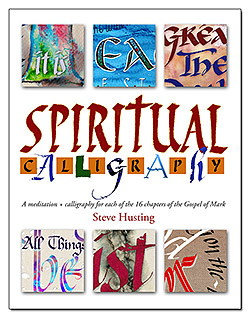
In Everything Give Thanks (art by Steve Husting)

In Everything Give Thanks (art by Steve Husting)

Thanksgiving message I gave in 2015 

1
One phrase repeated in Psalm after Psalm after Psalm is, “Give thanks unto the Lord, for He is good” (Psalms 136:1). Maybe it’s repeated so often because we forget. When we give thanks, it’s because we remember. We are called to remember. We see this when God brought the children of Israel out of Egypt and led them up to the Promised Land. At that point, Moses told the children of Israel to remember that God brought them out of Egypt’s slavery (Deuteronomy 15:15). Instead of being afraid of the inhabitants of Canaan, remember what God did to Pharaoh and his mighty army, drowning them in the depths of the sea (Deuteronomy 7:18). We remember what great things God has done for us, and the right response is thanksgiving. The children of Israel then entered the land, fought and won it. Continue reading

Posted in Encouragement | Tagged , | Leave a comment

Morning Affirmation

Reviewing God’s truths for me.

I am a new creation in Christ. God is my heavenly Father and has abundantly proven His love for me by the willing sacrifice of Jesus Christ for my sins. (So there is no need for me to start a question with, “If God is love, then why….?”) He has placed me into His family and I have the right and privilege of coming to His throne at any time.

Through Christ’s death, burial, and resurrection, my sinful self was laid in the grave and the new creation has risen with Him to the heavenly places. I can now die to the sinful temptations that come my way and resist their feeling of power – for they are only feelings with no real power. Continue reading

Posted in Encouragement | Leave a comment

Book Review: Switch On Your Brain

God has designed our brains to work with his program of changing lives. God not only tells us what to do, but has given us everything we need to follow along with his program. An obvious example would be giving us a mouth so we can pray, worship, and encourage others. He not only tells us to care for others, but has given us hands and feet to carry out acts of compassion.

In Dr. Caroline Leaf’s book, Switch On Your Brain, she reveals several fascinating features God has built into our brains that, when scripture is followed, results in mental and emotional healing and peace. (Yes, she’s a Christian and a scientist.) The brain has healing aspects built into its nerve/cellular structure. It repairs itself, removing the edge from bad memories, negative behaviors, and emotions. The brain physically uses God’s truths to heal itself. Continue reading

Posted in Book Reviews | Leave a comment

Leaving the Faith? Watch out for this logical fallacy

Many young people who leave home for college life end up abandoning their religion and moral constraints. (This is what the college professors and staff want them to do.) They are convinced by their professors that their religion was something their superstitious parents clung to, and the children don’t need those beliefs anymore. They are now free to choose the direction of their own lives. So, many young people are persuaded to leave their faith.

This reasoning the staff uses is based on a logical fallacy. A logical fallacy is a process of reasoning that is flawed. In this case, the fallacy is saying that if it is true for a part, then it is true for the whole. It goes like this.  Continue reading

Posted in Society and Culture | Tagged , , , | Leave a comment

Promises and Warnings

What is the purpose of the promises and warnings in the Bible? They serve the same purpose as promises and warnings in regular life. If we examine the promise to see if it had merit and follow through, we’ll get the benefits. If we examine the warnings to see if they have merit and heed them, we’ll be spared the negative consequences. There is nothing supernatural about this. Continue reading

Posted in Encouragement | Tagged , | Leave a comment

The Deceitful Heart

I consider myself a good person, not from any genuinely good works that I am doing, but because I’m not doing bad things, or I’m not as bad as “those people.” That’s deceitful thinking, because Jesus said that no one is good except God. We fool ourselves in this area because we do not compare ourselves to the perfect man, Jesus Christ, who always did the will of God. Continue reading

Posted in Encouragement | Tagged , , , | Leave a comment

Our “silly little sins”

I recently answered a question sent to me from gotquestions.org. This person, who is quoted below, thought her sins were silly little sins and she wondered why she was unable to get over them and stop repeating them. My reply comes from over 30 years of walking with the Lord. I doubt I could have given this reply after just ten years.  Continue reading

Posted in Sin and Salvation | Tagged , , , , | Leave a comment

The Pharisee in Church

The frequent run-ins between Jesus and the Pharisees were a clash between the Pharisee’s preoccupation with external things and Jesus’ emphasis on the spiritual kingdom. The Pharisees were interested in keeping their status quo, the rigid forms of religious law, looking good to their peers, and maintaining self-righteousness and a respectable position before the public.

Jesus, on the other hand, cared more about their relationship with God and their inner state. They cared about saying the right thing to look good while Jesus cared about them being real. They wanted rules and laws while Jesus wanted them set free to follow the Spirit wherever He would lead them. Unlike the Pharisees, Jesus was willing to be unpopular if standing for the truth would help some to advance in their spiritual walk with God. Continue reading

Posted in Encouragement | Tagged , , | Leave a comment

Faith without proof is alive and well among the religious and secular

Many religious people trust in their spiritual authority for their religious beliefs. They don’t study the religious text for themselves. They don’t understand how their authorities came by their tenets, so theirs is a personal faith without proof. “All I know is that when I die, I go to heaven, right?”

Many people trust in science authorities for their findings. They don’t study science textbooks for themselves. They don’t understand the complex findings by which their authorities arrived at their conclusions, so theirs is also a personal faith without proof. “All I know is that we came from a warm pond and are descended from monkeys, right?”  Continue reading

Posted in Science and Evolution, Society and Culture | Tagged , , , | Leave a comment

To learn, unlearn; to believe, disbelieve

In Philippians 3:4-6, we have a list of beliefs Paul had to disbelieve in order to believe, to unlearn that he may learn. For instance, according to this list, he believed in God and country until God corrected it to just “God.” He prided himself in being a Hebrew of pure Hebrew parents, and not a half breed from a mixed interracial marriage; God persuaded him that his parentage wasn’t enough, but being in God’s family was. Paul pointed to his prestigious Pharisaic denomination as though it put him in a high position, until God pointed out that Jesus didn’t check church attendance as a qualification. So much to unlearn! Little by little, all that he trusted in was refined so that it resulted in trusting just Jesus for righteousness (Philippians 3:7-11).

Continue reading

Posted in Uncategorized | Tagged , | Leave a comment

The Bible and Atheist agree: Blind Faith is Wrong

The popular meaning for faith is to believe something without proof. This is the “popular” meaning, and as with the meanings of several other words, it doesn’t match up with its meaning used in the Bible. For instance, the popular definition of church is the building that worshippers meet in. The popular meaning of saint is someone who did good religious works and died. The Bible doesn’t use these meanings. Continue reading

Posted in Encouragement | Tagged , , , , , , , | Leave a comment

Armor of God Series: the Belt of Truth

“Stand therefore, having fastened on the belt of truth, and having put on the breastplate of righteousness” (Eph. 6:14).

With the truth, we are seeing things as they really are. The truth is not just facts, but facts acted on.

A person may research what the Bible says about idolatry, which is putting something ahead of God or Jesus, and miss seeing his own idolatry. He has all the facts about the idolatry that drove Israel from God in the OT; he can list the idols the NT epistles condemn. But when it comes to his own idolatry – his life emphasis on hobbies and leisure, for example – he doesn’t yet have the truth of idolatry, that he needs to set Jesus first and foremost.

Through the Word, the Spirit impresses the truth of the spiritual state upon the child of God’s heart. Accepting the truth, he repents and puts his idols in their proper place. The truth makes a difference; facts are just the tools the Spirit uses to communicate life-changing light to us. Continue reading

Posted in Encouragement | Tagged | Leave a comment

The Faith to Endure Hardship

In Hebrews 11, we are introduced to a series of individuals who were known for their faith. Noah prepared an ark, expecting a flood. Abraham moved out of his country at the word of God, not knowing where he was going. Sarah believed God, and birthed a child in her old age. Moses left the pleasures of Egypt to journey with the people of God. They were not just known for faith – but an enduring faith; they were tested in hard circumstances and kept on trusting in God no matter what.

In Hebrews chapter 12, the spotlight swings to the readers of the epistle. “Surrounded by so great a cloud of witnesses” (12:1), the witnesses of God’s faithfulness noted in chapter 11, what are we to do? Continue reading

Posted in Encouragement | Tagged , , , , , , , | Leave a comment

A Clean Conscience At Last

At the coming of Jesus, God introduced something new. With the death, burial, and resurrection of the Christ, God creates a new covenant with believers that results in a clean conscience. The tenth chapter of Hebrews explains this feature of our salvation that many of us are unaware of, and so have let the shame of our past taint the present. We don’t have to let guilty thoughts from past wrongs paralyze us from moving forward. Let’s cover these verses in detail, because the words of Christ are still true: “the truth shall make you free.” Continue reading

Posted in Encouragement | Tagged , , , , | Leave a comment

“Love your neighbor as yourself”

Jesus told us to love our neighbor as we love ourselves in Mark 12:31. Some people have said that they cannot love their neighbor as they ought because they do not love themselves. On the contrary, the Bible is clear that we love ourselves too much! In this article, I hope to reveal how we love ourselves, and armed with these thoughts, how we can love our neighbor as ourselves.

If we replace the word love with other words, the commandment becomes easier to comprehend. Replace “love yourself” with “pamper yourself,” “show mercy to yourself,” “take care of yourself,” “do good to yourself,” and then the ideas on how to love others begin to form. Let’s look at some examples of how we love ourselves. Continue reading

Posted in Encouragement | Leave a comment

The Salvation of the Soul

What is the salvation of the soul, and what does it look like? The first few verses of 1 Peter chapter one give us a strong sense of this salvation and then concludes with, “receiving the end of your faith – the salvation of your souls” (1 Peter 1:9). What is this salvation, and how can we know whether our spiritual growth is heading in the right direction? Continue reading

Posted in Encouragement | Tagged , , , , , , | Leave a comment

The Neglected Deliverance

We tend to seek the Lord’s deliverance when we get into personal trouble. But there is a deliverance that keeps us out of the trouble in the first place. Which would you like – to fall into trouble and try to get out of it, or to avoid it in the first place?

For instance, the word tells us about deliverance from the snare of the fowler and from the perilous pestilence (Psalms 91:3). Our first impression of this deliverance is that we’ve fallen into a trap or are experiencing a spiritual plague and the Lord promises to rescue us from it. But that’s not the best way the Lord delivers us. For instance, Proverbs identifies the promiscuous woman and tells us to avoid her (Proverbs 5). Avoiding her, we avoid a terrible fate. Thus, by heeding the warnings of Scripture we identify and avoid the traps beforehand while the more simple-minded don’t pay attention – and fall right in (Proverbs 22:3). Continue reading

Posted in Encouragement | Tagged , , , , , | Leave a comment

Faith and the Spirit’s Leading

What is faith?

A definition is in order. What is faith? If faith means to believe something without proof, as many claim, then how is it different from blind faith? What I find funny is that those who dislike faith because it believes without proof, believe in this definition of faith – without proof!

The word faith appears many times in the Bible in the New Testament, which was written in Greek. If we turn to a Greek scholar’s work, Vine’s Expository Dictionary of New Testament Words and look up faith, we find it is the word pistis, which means “primarily, firm persuasion (akin to peitho, to persuade), a conviction based upon hearing, is used in the N.T. always of faith in God or Christ, or things spiritual.”

To have faith means to have a firm conviction about something. How one comes to faith is not in the meaning of the word. One may have faith based on a wide variety of evidence, or not; the proof is not part of the semantic meaning of the word. The meaning of faith is centered on the persuasion you have, not on how you arrived by that persuasion, or even what you believe in.

Those who say that (true) faith is blind or that it means to believe something against all reason are wrong. Religious faith is based on a Greek word with a real definition found in a Greek dictionary which derives its meaning from the N.T. context in which it appears. Faith means to be persuaded of something. (The only biblically sound reason for faith to mean something different is when it’s said to be “the faith,” in which case it is talking about the Christian life and doctrine in general.)

If you strongly insist (have a firm conviction, have faith) that faith means to believe something in spite of the facts, then your personal faith is real, but based on false information.

A wrong meaning of faith will result in wrong practices and a wrong understanding of the Scriptures in which the word appears. Continue reading

Posted in Encouragement | Tagged , , | Leave a comment

Evolution vs. Creation: Collision of Two Worldviews

Neither creation nor macro-evolution have physical proof for their positions. Rather, each party looks at the scientific data from their own perspective and looks for evidence to support it. For instance, the people who are convinced that macroevolution has occurred look at all the fossils unearthed over the centuries and concludes, “Well, since we all evolved, then these invertebrates probably evolved one after the other and the vertebrates branched off and evolved their own way. All these bird-like creatures evolved in order and the mammals branched off and evolved, splitting up more and more, based on the similarities among them.” The evidence is plain.

Those who believe God created each kind of creature by itself, seeing the same data the evolutionist sees, concludes, “All fossilize skeletons are full and complete. All parts needed to be a living creature are all accounted for. There are no in-betweens. These skeletons illustrate the biblical account, that God formed each animal according to its kind. They did not evolve but were created as is.” The evidence is plain.

Same data; same science; different viewpoints Continue reading

Posted in Science and Evolution | Tagged , , | Leave a comment

Book Review: When the Storm Hits

When the Storm Hits
by Chuck Smith
Copyright 2013 The Word for Today
http://www.twft.com

What do we do when the storm hits; how are we to react when the troubles come?
This book reminded me of several perspectives regarding our trials that I had forgotten. God has a purpose for our trials that Christless people cannot share in. Our trials will not overwhelm us when we see them through God’s eyes. Here are just a few thoughts that were prompted by the pages of this worthwhile book by the late Chuck Smith, who pastored the Calvary Chapel church in Costa Mesa, CA.

Continue reading

Posted in Book Reviews | Tagged , , | Leave a comment

Why macro-evolution doesn’t make sense

One major barrier against the gradual evolution of relatively simple organisms into complex ones rests on the organism’s inability to understand its environment and adapt to it.

For instance, how could a blind organism understand that color is produced by light waves reflected by or absorbed by objects, and correctly deduce that it must create an eye composed of rods and cones to capture these rays and correctly interpret them? How could a blind organism know that light could be too bright or too dark and create a pupil which dilates and contracts to monitor the correct amount of light?  It just doesn’t make sense that something blind and primitive could instinctively understand that color is seen according to an object reflecting certain invisible wavelengths of light. Continue reading

Posted in Science and Evolution | Tagged , , | 1 Comment

Paralyzed When Making New Year’s Resolutions?

A centurion came to Jesus and told Him, “Lord, my servant is lying at home paralyzed, dreadfully tormented.” Have you felt paralyzed at home lately? You have decisions to make, but feel too frozen to move? You have things to do, but can’t get going? You are tormented by things nagging in your mind, but can’t find the energy or will to do them? It’s like a sickness in you that you can’t heal. Continue reading

Posted in Encouragement | Tagged , , , | Leave a comment

Modern Family: Talking to the Camera

The TV sit-com Modern Family integrates a technique used in reality shows such as Survivor and Master Chef in which the contestants talk candidly about themselves on camera away from the others. The Office also used this means to comedic effect, and it was a staple of the series. Continue reading

Posted in Uncategorized | Tagged , , , , , | Leave a comment

Book Review: The Question That Never Goes Away, by Philip Yancey

“Why did God allow this to happen?” “Why didn’t God protect us?” “Why doesn’t a good God stop this evil?” These are all variations of the question that recurs — that never goes away —  in the aftermath of any great and not-so-great tragedy. “Where is God when it hurts?”

While exploring the question, Philip takes us on trips to some of the saddest places on earth, including Japan following the tsunami, Sarajevo and the ‘ethnic cleansing,’ the child killings at Newtown and Sandy Hook. The question has only slight variations in these places; in asking, the questioner instinctively assumes that God is a good God.

Philip’s hardest task comes when trying to find words to answer the question in a way that would comfort the hearers who have suffered loss. Going from place to place to give talks on this subject, he advances several perspectives. One I remember most is when he asked the parents who lost a child in Newtown (my paraphrase), “Now experiencing the worst pain a parent could feel, where everything seems so empty and lost, and your spirit crushed, how many of you would rather never have experienced the joy of having your child at all?” None of the people raised their hands; though their pain is most unbearable, the joy beforehand was still worth it. Continue reading

Posted in Book Reviews | Tagged , | 5 Comments